… for bridal showers. I’m in between treks to Iowa and New Jersey—cycling loads of laundry, gathering stores for the home-front (I’m leaving him behind), and soaking my already-overgrown plants. And planning party number two, for my sister. I hope the mini quiches turn out.
Tis also the season for gardens to start producing, and I heard a good story about one while I was visiting my beyond-cool friends back in Iowa City. It’s a neighbor story, and a simple one. My foodie friend knocked on a farmhouse door two blocks from her apartment (which is home to some lively herbs, but nonetheless not tillable) and inquired about her neighbor’s backyard availability. Now she and her husband share two plots with their generous hosts—and keep an eye on the place when the neighbors are out of town. She just knocked on the door, and asked! Here’s a picture (lettuce and spinach in foreground):
Next week’s garden entry: “a bequest.” Stay tuned!
Thursday, June 3, 2010
Sunday, May 16, 2010
citified hospitality
I’m continuing to think about what “hospitality” really looks like, especially in our pseudo-urban context. This reflection from a woman in Vancouver was a good read, mainly because it’s a story. She says,
“The new reality of city living meant being in close proximity to our neighbours and interacting with them on a daily, personal basis—not just when we want to conveniently say hello.
Although I know those who would disagree with me, I have found it easier to be neighbourly while living in the city than in the suburbs. Since space is limited in the city, I notice that people tend to congregate and cross paths regularly in public facilities such as parks, libraries, community centers, and transit—whereas in the suburbs, people tend to spend more time in the private 'playgrounds' of their homes (basements, rec rooms) and backyards.”
I felt this familiarity last week; a sense that my particular part of Arlington was really a neighborhood. I saw a good friend at the grocery store and an acquaintance on the Metro. Last night I spotted a former colleague in the crosswalk. I like the sense of shared public space here, and I hope it continues to challenge me to share my own space.
“The new reality of city living meant being in close proximity to our neighbours and interacting with them on a daily, personal basis—not just when we want to conveniently say hello.
Although I know those who would disagree with me, I have found it easier to be neighbourly while living in the city than in the suburbs. Since space is limited in the city, I notice that people tend to congregate and cross paths regularly in public facilities such as parks, libraries, community centers, and transit—whereas in the suburbs, people tend to spend more time in the private 'playgrounds' of their homes (basements, rec rooms) and backyards.”
I felt this familiarity last week; a sense that my particular part of Arlington was really a neighborhood. I saw a good friend at the grocery store and an acquaintance on the Metro. Last night I spotted a former colleague in the crosswalk. I like the sense of shared public space here, and I hope it continues to challenge me to share my own space.
Wednesday, April 14, 2010
bricolage
A piece in today’s New York Times challenges the notion that globalization is flattening our cultural horizons and making us homogeneous. Michael Kimmelman explains, “The common denominator of popular culture … seems to have just intensified the need people now feel to distinguish themselves from it. And global technology has made this easier by providing countless individuals, microcultures and larger groups and movements with cheap and convenient means to preserve and disseminate themselves.”
The handmade and vintage shopping website Etsy comes to mind: One-of-a-kind products from small-time designers/producers who sell in a global market to those eager to distinguish themselves outside of popular culture. The things we buy shouldn’t define us—I agree with Andy Crouch that consumption is a limited frame for “culture”—but our choices set us apart from the mainstream and help us construct a new identity and unique aesthetic.
Kimmelman gives an example: “When Mats Nilsson, a Swedish product-design strategist for Ikea, not long ago told The New York Times that he loves to browse for handmade baskets in Spain, bird cages in Portugal, brushes in Japan and hardware on the Lower East Side of Manhattan, he was creating his own cultural identity out of the bric-a-brac of consumer choices made available by the globalizing forces of economic integration. Bricolage, it’s called. Anyone may now pick through the marketplace of global culture.”
Aside: The word “bricolage” made me think of the Ricola cough drop commercial. An odd etymology, no?
The handmade and vintage shopping website Etsy comes to mind: One-of-a-kind products from small-time designers/producers who sell in a global market to those eager to distinguish themselves outside of popular culture. The things we buy shouldn’t define us—I agree with Andy Crouch that consumption is a limited frame for “culture”—but our choices set us apart from the mainstream and help us construct a new identity and unique aesthetic.
Kimmelman gives an example: “When Mats Nilsson, a Swedish product-design strategist for Ikea, not long ago told The New York Times that he loves to browse for handmade baskets in Spain, bird cages in Portugal, brushes in Japan and hardware on the Lower East Side of Manhattan, he was creating his own cultural identity out of the bric-a-brac of consumer choices made available by the globalizing forces of economic integration. Bricolage, it’s called. Anyone may now pick through the marketplace of global culture.”
Aside: The word “bricolage” made me think of the Ricola cough drop commercial. An odd etymology, no?
Sunday, April 4, 2010
monumental springtime
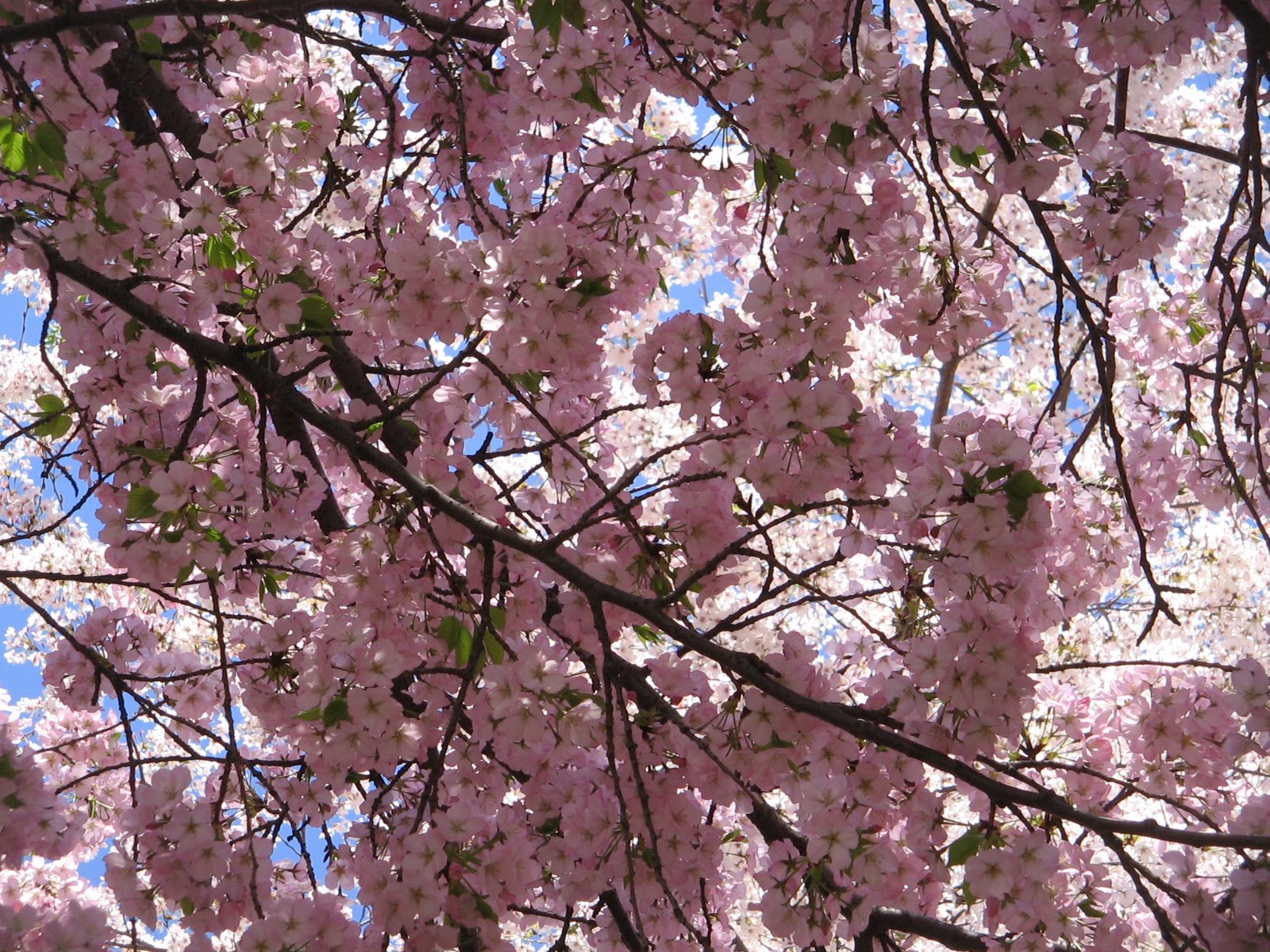
Spring hath sprung. A couple weeks ago, actually. For the first time in my memory, the month of March brought flowering trees, green grass, and tulips. And as we celebrated Resurrection Sunday today, green buds had appeared on even the bigger trees. Though it’s been said a thousand times before, spring does remind me of God’s goodness. Especially when it arrives in March!
On Good Friday, we visited the famous cherry blossoms at the tidal basin. (Pictures below.) It felt a bit celebratory for the day marking Christ’s death on the cross, but we ended the day with a simple, solemn church service. And today … He is Risen!
Subscribe to:
Posts (Atom)